2026-11-15 ·
Mosquito Season in Florida: What Yard Treatment Really Does
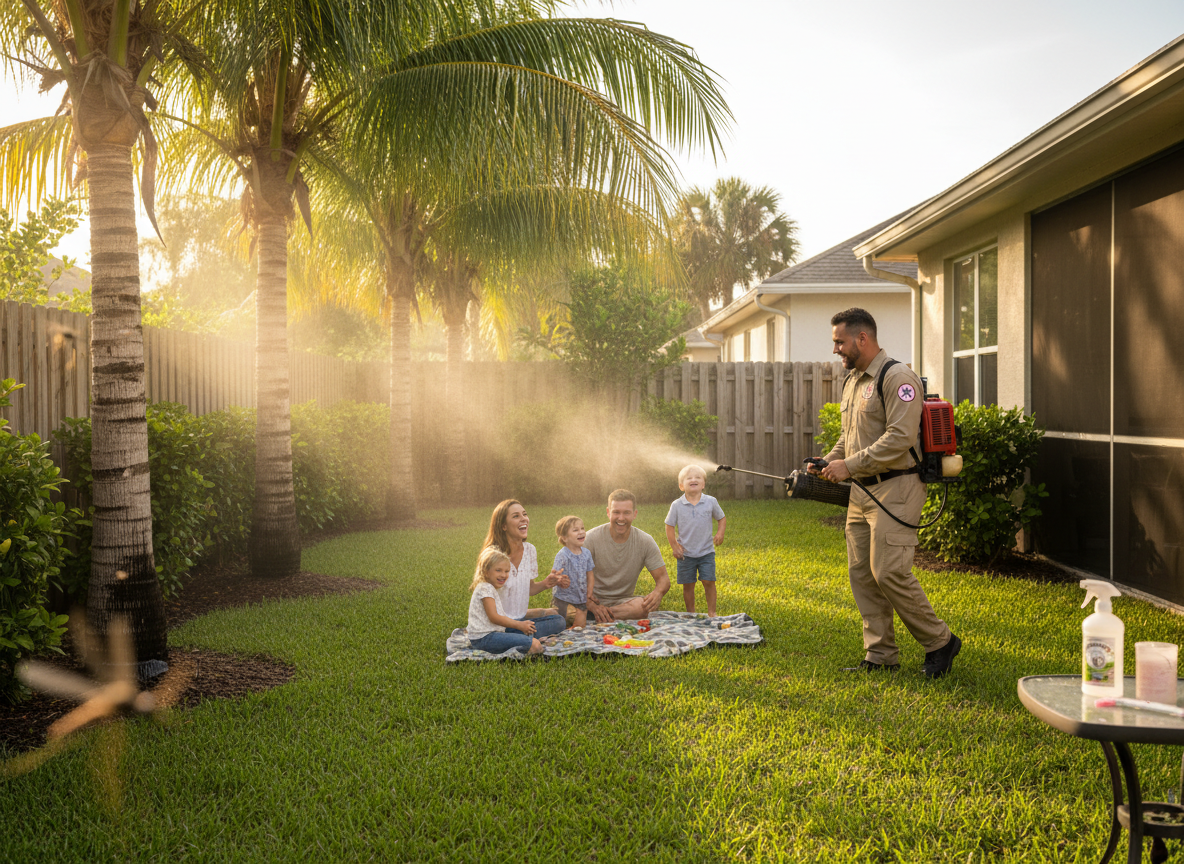
Yard treatment in Florida reduces active mosquitoes by 70 to 90 percent for three to four weeks when the technician targets breeding spots and resting areas. Results depend on rain, property size, and how many larvae already exist in standing water. The treatment uses a residual spray on grass, shrubs, and fence lines plus a growth regulator in water sources. It does not clear every mosquito from neighboring lots or stop new eggs from hatching after heavy storms.
Mosquito Breeding Spots Around the Home
Florida mosquitoes lay eggs in any water that sits longer than a few days. Gutters, bird baths, plant saucers, and low spots in the lawn all support larvae within 48 hours. Homeowners should empty or treat these spots every week because one female can produce 100 eggs at a time. Subterranean water in irrigation boxes and tree holes also feeds larvae year round. A technician checks these exact locations during a visit and applies product only where larvae or adults rest. Skipping the inspection step leaves hidden sources active and shortens how long the yard stays quiet. Regular checks cut the need for repeat calls and keep costs lower over a season.
Steps a Technician Follows During Treatment
The technician starts with a walk around the full property to map water sources and shaded resting spots. Next comes a fine mist of adulticide on foliage and structures where mosquitoes land at dusk. A separate liquid growth regulator goes into any water that cannot be drained. The whole process takes 30 to 45 minutes on a standard lot. No interior work occurs unless mosquitoes have entered the home through open doors or gaps. Homeowners receive a written list of treated areas and any follow up steps such as clearing roof gutters. This targeted approach avoids blanket spraying and keeps product use to the minimum needed for control.
How Long the Results Hold and What Affects Them
Most yard treatments stay effective for 21 to 30 days in normal Florida weather. Heavy rain within 48 hours can wash some product away and shorten that window to two weeks. Properties with many trees or thick ground cover often need a second pass sooner because mosquitoes find new shelter. Summer heat speeds evaporation while winter months extend the interval between visits. Homeowners who remove standing water weekly see the longest gap between treatments. The technician can adjust the product mix on later visits if results fade faster than expected.
Cost Ranges and Factors That Change the Price
A single yard treatment on a quarter acre lot runs from $150 to $250. Larger lots or properties with heavy shade and multiple water features move the price to $300 to $400. Quarterly programs that cover spring through fall average $450 to $650 for the season. The main variables are lot size, number of water sources, and whether the technician must return after storms. Written estimates list every charge so homeowners know exactly what each visit covers. No hidden fees appear later because the technician measures the property on the first call.
When to Schedule Service This Season
Call when daily bites increase or when mosquitoes appear inside the home at night. Early spring treatment before the first swarm prevents rapid population growth. Properties near retention ponds or coastal marshes benefit from starting in March. A follow up visit four weeks later maintains control through the wettest months. Homeowners who combine weekly water removal with professional sprays keep numbers lowest. For full details on available services see pest control. Related reading on other common Florida issues appears in Termite Signs in Florida Homes and What a Treatment Involves.